.png)
Gallery IV: The Voices of Memories
This gallery brings together the human and nonhuman testimonies of Hurricane Katrina. Here, stories from survivors, artists, historians, water, land, and infrastructure intertwine to illuminate how disasters are co-created across social, ecological, and political systems. This space invites you to listen, witness, and reconsider what it means for a landscape—and a community—to remember.

01
Human Voices: Witnessing the Storm
These testimonies capture the lived experience of Katrina’s landfall and aftermath—the uncertainty, the fear, the waiting, and the abandonment. Survivors speak to the racial and economic inequalities that shaped evacuation, relief, and recovery.
Transcripts
"102...I need someone out here, ma'am. I'm going to die in this attic. The water is steady rising in the attic, ma'am... and I'm going to drown in the attic. I'm 37 years old."
"Zero. Pray fo' me here. Oh, sir, I'm gonna pray for everybody, even myself."
Dispatch: "Your daddy's gonna take care of you, ok baby. " Sarah Armstrong: "I'm scared, the water's to my knees." Dispatch: "I know baby, but your daddy's gon' take care of you, ok." Sarah Armstrong: "I want to get out of here." Dispatch: "Sarah, listen to me ok." Sarah Armstrong: "Yes, ma'am..." Dispatch: "Listen to me, ok. Your daddy and your momma are right there with you. Their not gonna let anything happen to you, ok."
"My mother and I are stranded in the attic and she's a diabetic."

The wetlands recount a story decades in the making. Long before Katrina, fossil fuel infrastructure carved pathways for saltwater, eroding the natural buffers that once protected New Orleans. This is the slow violence that made fast disaster possible.
 Roland Golden"The Other Side of Caution" Two orange-and-white barricades block a street having damaged houses and downed powerlines. A White corner building a pergola supported by two rectangle columns. The building is surrounded by debris, including household furniture. |
|---|
 Screenshot 2025-12-02 152351 |
 Screenshot 2025-12-02 152340 |
 Screenshot 2025-12-02 152332 |
 Screenshot 2025-12-02 152221 |
 Screenshot 2025-12-02 152159 |
 Screenshot 2025-12-02 152146 |
 Screenshot 2025-12-02 152212 |
Roland Golden, (1931 - 2019)
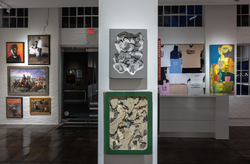
 The City Holds Us - Twenty Years After Hurricane KatrinaNew and Important Works by 10 Gallery Artists, Reflecting On the Past Two Decades (July 22nd - September 13th, 2025) Photography Courtesy of Mike Smith |
|---|
 Screenshot 2025-12-02 153532 |
 Screenshot 2025-12-02 153521 |
 Screenshot 2025-12-02 153435 |
 Screenshot 2025-12-02 153514 |
 Screenshot 2025-12-02 153502 |
 Screenshot 2025-12-02 153411 |
Ferrara Showman Gallery
 Ted Ellis |
|---|
 Screenshot 2025-12-02 154506 |
 Screenshot 2025-12-02 154851 |
 Screenshot 2025-12-02 154452 |
Ted Ellis Art
A New Orleans Painter
Ted Ellis Commemorates Hurricane Katrina with his Artwork
A New Orleans Painter's collection titled,
"Paintings of Anguish and Hope After Hurricane Katrina"
Exhibition: This City Holds Us - Twenty Years After Hurricane Katrina
July 22, 2025 - September 13, 2025
02
Cultural Memory Keepers Artists, Musicians, & Historians: Rebuilding Through Memory
After Katrina, cultural memory workers—artists, musicians, historians—became archivists of loss and renewal.
Their work holds space for grief, remembrance, and transformation. Through sound, image, and storytelling, they document what cannot be captured by official reports.
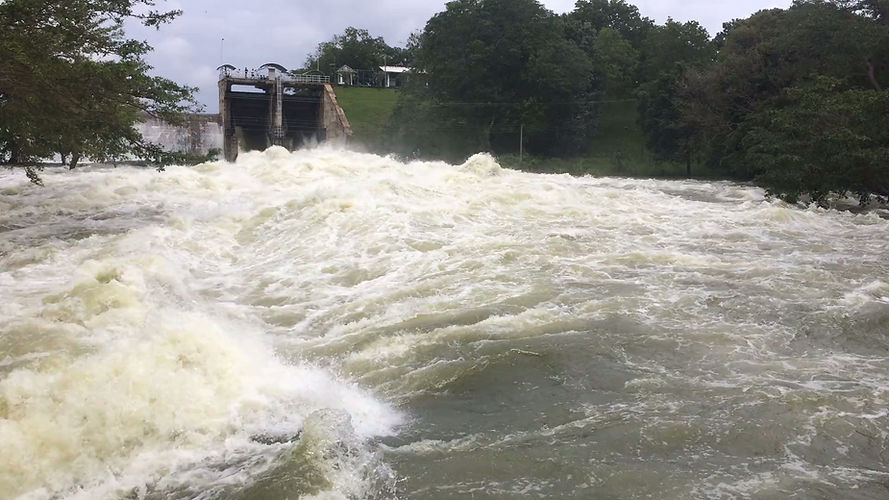
Water is not silent. Its movement during Katrina was forceful, chaotic, and directive. In this testimony, water speaks through pressure, speed, collapse, and inundation—reminding us that memory is also material and fluid.
03
Nonhuman Testimonies: When Nature Speaks
In this section, the landscape itself becomes a storyteller. Through animated maps, hydrological models, and layered sound, the levees, wetlands, and floodwaters recount their own roles in the unfolding of Hurricane Katrina.
These “nonhuman testimonies” reveal how infrastructures weakened over decades, how wetlands eroded through slow violence, and how water followed the paths carved by industry and neglect. By giving voice to these environmental actors, the gallery disrupts human-centered narratives and highlights the intertwined agencies that shaped both the catastrophe and its aftermath.
 Around 80% of New Orleans was covered by Flood WaterThe levees in New Orleans were designed only to withstand category 3 hurricanes, which presented obvious problems for the city once Katrina was upgraded to a category 5, with winds that exceeded 175 miles per hour and storm surge that reached up to 20 feet along coastal regions of Mississippi and Louisiana. |  Levee & Marsh LandLow salinity marshes in the area took a huge hit due to their shallow root hold, and didn't really stand a chance, as they weren't receiving enough nutrients pre-Katrina due to the way humans were managing the flow of the Mississippi River at the time. |  Oak Forest in Louisiana after Hurricane Katrina |
|---|---|---|
 Chinese Tallow Tree (Fruit)Katrina also wiped out the forest in the floodplain of the Pearl River Basin, which left room for invasive Chinese tallow trees to grow like wildfire - they already existed in little pockets along the coast, but their seeds can exist floating along the surface of the water for extended periods of time, and they planted root in the basin in no time flat. The Chinese tallow tree outcompetes neighboring species using increased shade cover and chemical weapons. |  CogongrassCogongrass is another invasive species that was allowed to flourish in Louisiana and beyond after Katrina, which severely harms surrounding ecosystems in the areas afflicted. |  Water HyacinthThe storm's winds and surge also resulted in saltwater flooding certain areas, including marshes, terrestrial ecosystems, and especially other freshwater water basins - lakes, rivers, and streams. The influx in saltwater caused a significant change to the composition of the water sources, which means that freshwater organisms were affected as well. The water hyacinth only tolerates freshwater well, so the increased salinity of the surrounding water resulted in a temporary cut back on the populat |
 Nile TilapiaThere were also concerns raised about whether invasive nile tilapia would escape from local fish farms neighboring wetlands, lakes, rivers, and streams, but none of the tilapia ended up escaping and the invasive species stayed completely put. |  Screenshot 2025-12-02 164945 |  Wading Bird in LouisianaKatrina also damaged at least 16 federal wildlife refuges, which were home to many species, including some that were deemed threatened or endangered. Some of the threatened species whose habitats were altered due to Katrina's forces include Kemp's Ridley sea turtle, the Alabama beach mouse, and various species of wading birds. |
Artist's Rendition / CGI Recreation of Hurricane Katrina's affects on New Orleans the moment the levees broke, 3 days after the storm hit when many were claiming "we dodged a bullet" - video credit 'Five Days at Memorial.'
Credit: AJFraser (YouTube)
01.
Distributed Agency
Distribution Agency
There's no single actor—human or nonhuman—creates an event alone. Instead, disasters like Katrina emerge from entangled networks: levees, wetlands, policymakers, storms, builders, and residents all co-produce outcomes. This framework helps us understand memory as multi-sourced, shaped not only by survivor testimony but also by the material actions of water, land loss, and failing infrastructure.
02.
Black Ecological Knowledge
This foregrounds the ways Black communities interpret land, weather, and environmental precarity through lived experience, cultural memory, and survival strategies. In Katrina’s aftermath, this knowledge exposed the racialized nature of vulnerability, evacuation, and state abandonment. Centering this epistemology reveals how Black storytelling, music, and spatial memory offer alternative ecological narratives often erased from official accounts.
03.
Slow Violence
Slow violence reveals how harm is inflicted incrementally and invisibly over years, only erupting visibly during a disaster. Along the Gulf Coast, decades of wetland erosion, oil-company canal cutting, and underfunded flood protection systems created vulnerability long before Katrina made landfall. This framework reframes the storm not as a sudden catastrophe but as the culmination of long-term environmental injustice and neglect.
04.
Indigenous Epistemology
Indigenous epistemologies view land, water, and weather as sentient participants in history, carrying lessons, warnings, and memories. These ways of knowing foreground reciprocity and relationality, contrasting sharply with extractive colonial frameworks. Applied to Katrina, Indigenous perspectives illuminate how the storm interacts with centuries of land loss, stewardship disruption, and environmental dispossession, offering deeper insight into ecological time and resilience.
THEORETICAL FRAMEWORK


